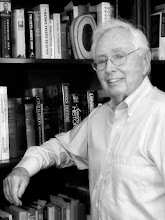
Saturday, January 25, 2014

WHY WE RELATE:  A MODEL IN SEARCH OF DATA
It is the thesis of this book that all behavior (and hence all relationships) is hedonistic.  All behavior serves the most basic of human motives—to establish and maintain identity, to provide repeated and consistent validation of who we are and to what we aspire.  This is true even for the most seemingly selfless behavior and even for those who appear to harbor a low self-esteem.  Even the most self-debasing of us, the most severely depressed, the most guilt-ridden, and the most down-trodden cling to the belief and the hope that despite all outward appearances, the most self-defeating behaviors, the most extreme histories of rejection and defeat, despite all the humiliation and self-recrimination, we are basically innocent, well-intended, and worthwhile.  With this premise in mind we will examine how this most basic and pervasive of human motives, exclusive of physiologic al needs, influences our selection of companions, friends, and lovers, how it determines whom it is we admire,  how we relate to them, and our success as social animals.  We will examine how this need determines the parameters of what people define as personality and the manner in which it undercuts all contemporary theoretical models as well as strategies for self-improvement. 
Time Discrepancy:
            Separations among friends vary in length.  When there has been a disconnect  over any period of time there is also a discrepancy between the perceptions and experiences of separate individuals.   It is this discrepancy that provides the subject of conversation when friends re-establish contact.   Social networking using Facebook, Twitter and other media ameliorates some of this pressure but does not  replace the need for to face-to-face interactions.    When friends are able to resume close physical contact the need to bring each other up=to-date generates strong  pressure for revealing.  The intensity of such pressure is a function of the time of separation, the nature of intervening experiences and individual differences which may be gender related.  The verbal and nonverbal interactions serve the purpose of bringing the two friends from a condition of cognitive dissonance to one of   consonance.  Such harmony of knowledge, perceptions, and attitudes provides validation for bot individuals of their core beliefs, emotions and value judgments, confirming their sense of identity.  For very close friends, separated over a long of time, there is often a sense of comfort rapidly established that things remain as they always were in the relationship.  For some individuals even a brief separation can be upsetting.  Interactions between strangers are awkward for some people because of the lack of a common experiential core.  We search for similarities to establish a relationship base.  Shared friends, places of residence, experiences are explored.  When no common ground is uncovered the relationship is likely to fail.
Gender Differences:
            It is generally believed that males are less talkative and less likely to reveal their feelings than females.  Recent research with middle ands high school students  Wiseman, 2002 ;  2013)   seems to support this generalization but also indicates that boys are no less emotio0nally involved and often upset by relationships than girls.  They just don’t like to reveal these feelings.   My own experience providing counseling individually and in groups in the high school confirms this finding for me.  It is very difficult to persuade guys to agree to counseling,  especially in group.  When a boy does chance participating in a group he is less likely to be vocal.  Guys have their own rules about what they reveal to other guys but is more likely to be in the form of boasting about conquests than revealing true feelings.   Women, in my experience can spend hours on the telephone or in social situations describing feelings.
Men can spend several hours watching a football game with male
friends with little conversation except about specific plays on the field.

They experience a feeling of closeness and communication.     

Counseling and therapy:
           
While most schools of psychotherapy and counseling acknowledge the importance   of relationship between therapist and client, few delve deeply into thitopic, emphasizing technique and strategies of intervention.  Behavior therapy focuses upon the importance of reinforcement techniques to increase the strength of healthy responses.  Cognitive behavior therapy recognizes the significance of cognitions and employs interventions which challenge irrational thoughts and encourage rational thinking.   While irrational thoughts may lead to self-defeating behavior, they are not irrational to the client.  They serve a purpose or they would not be viable.  It is likely that even self-defeating thoughts may serve a higher purpose in preserving identity.   Therapists would be interested in why such thoughts persist.  Counselors have been strongly influenced by the Nondirective Therapy approach of Carl Rogers, which does stress the importance of the client counselor relationship.  Most critical to this approach is the success of the counselor in communicating his understanding of the client’s feelings.  It is essential, Rogers taught ,  that the client recognize he or she has been “received.” 
Without denigrating the effectiveness of behavioral approaches, it is Rogerian therapy that most clearly exemplifies the power of the validation that a therapist can impart to his client.  Recognizing that a therapist is aware and can experience and share one’s own perceptions and feelings feeds directly into the deepest core of the client’s psyche.  It is to acknowledge and validate identity.
Bullying:
            The bully enhances his own self-esteem by dominating and publically humiliating others.  He or she requires an audience for their acts.  Fran, a high school sophomore, had a history of scoliosis.  She wore a back brace for many years.  While the brace was now gone, she was vulnerable to abuse because of her own fragile ego.  Fran revealed to me that a girl was spreading lies about her. Her friends  told her  the perpetrator was telling people she was a “slut.”  This was far from the case.  The culprit was now dating a boy whom Fran had previously been “hooked up” with. She hadn’t reported the abuse because she didn’t want to get the girl in trouble. I encouraged Fran to report the incident, which she did, and worked with her on issues of self-esteem.  Fran thought of herself as damaged and seemed to believe she deserved the abuse.  The perpetrator needed  to devalue Fran because of concerns that her new boyfriend was still interested in Fran.       


                                    References    
Festinger, L. (1957).  A theory of cognitive dissonance.   Stanford, CA:  Stanford University Press.


Wiseman, R. (2002) Queen bees and wannwebes.  Harmony Books.

Wiseman, R. (2013).  Masterminds and wingmen. (20130.  Harmony Books.

Wednesday, January 22, 2014

My friend Burton


     My dear friend Burt died this month.  He was a poet, philosopher, comedian, businessman, humanitarian.  We were buddies growing  up.  He kept me laughing through elementary and high school and beyond.

     In high school we both took a temporary job selling World Book Encyclopedias.  He wound up selling one set, onlybecause he placed a brochure in the window of his father's store.  I didn't sell any.  That doesn't matter here.  Our instructor was a very proper, well dressed lady who would send us to the poorest neighborhoods in Newark, New Jersey, where parents couldn't afford to feed their children properly, let alone buy encyclopedias.  "Hold up your sample volume so the customer can see a picture, pointing discretely to the photo with your little finger," she advised.   Burton was a large, muscular guy with extraordinarily large hands.  Holding his book so that only I could see, he covered the entire page with his huge paw. "Like this?"  he whispered to me, innocently.  I could not contain my guffaws, much to the disapproval of the instructor.

     More recently we visited the Whitney Museum of rt in New York City, with our wives.  Neither Burt nor I were terribly interested in the paintings or sculpture.  A carved wooden bench sat near one of the walls.  It was obviously an antique and not meant to be sat upon.  Burt indicated to me alone that
was going to sit on the fragile bench without moving.  "I will make believe I am a statue and see if people are fooled. "  Disregarding the guard at the door, he did just that.  His wife, an artist herself, was not amused.

     We attended a reunion of our class from the Bronx High School, of Science.  I touched bases with a few old friends but generally found many people stuffy and full of themselves.  Admittedly, this was a high achieving group.  Our high school has produced eight Nobel prize winners in physics.  The M.C. for the meeting listed the number of physicians, scientists, and academicians from our class.  Burton, seated next to me, announced to me and my wife, "They haven't gotten to my category yet...beggar."

     If there is an afterlife awaiting us, somewhere is a remote corner Burton is seated at a table, regaling others with funny stories.  I hope he is saving a place for me by his side.

Monday, January 6, 2014


                                                              Saving Rosetta


          I grew up in the city.  We didn't see many animals outside of a few neighbor's cats and dogs,

squirrels in the park, and an occasional visit to the Bronx zoo.  So I didn't develop much of a feel for

animals.  My wife Joyce, on the other hand, was from a rural area and loves all things living.  I tell you

this to better understand what follows.

     We were watching television on the flat screen in my basement when we heard a thumping.

Joyce thought it was ice falling against the house after a severe winter storm.  I harbored more

sinister thoughts.  We located the source of the disturbance outside the egress window.  (The basement

had no door to the outside.)  The window would allow us to escape in case of fire.  A large rabbit

had fallen into the well, some four feet deep from the outside.  The beast was frantically trying to

escape but there was no way it could do so.  Nor could we reach it from inside.  Joyce ran out but

couldn't lift the plastic dome cover, which was frozen shut.  It was the coldest night in about twenty

years and seven inches of snow (now ice) lay on the ground.  "Leave it until morning when it is light "

I prompted, from beneath my down comforter.   "It will freeze to death out there" Joyce countered.

"Give me your comforter."  I know better than to protest when Joyce uses a certain tone of voice.

She grabbed my favorite TV-watching cover, ran out again and threw the blanket down the well.

"This should help it survive the night," she explained.  Joyce was up all night, checking on the

furry creature, for whom she had now assumed total responsibility.  I slept pretty well, considering

that she kept hopping out bed to check the beast.

     "She's still alive," Joyce reported in the morning.  "How do you know it's a she?"

"She gets things done and never complains.  Her name is Rosetta."   I figured we could call the Fire

Department.  They have ladders.  But by 7:00 AM she had gone out again, climbed down into the

well, wrapped Rosetta in my comforter, placed her in a large plastic tub, and brought her into the

 house.  She had  also placed some lettuce and carrot greens and a cup of water in the tub.  I suggested

a heating pad to warm up my blanket.  We did that and after an hour or so Rosetta was warmer but still

immobile.

     At 10:00 AM Joyce called the local vet who had just had surgery and begged off.  She suggested a

shelter for wild animals. The vet at the shelter praised Joyce for her compassion for animals and offered

to take the animal.  She was treating a very sick dog who was lethargic and paralyzed.

Joyce, knowledgeable about such things, suggested that the dog may have swallowed some antifreeze.

"Wait, replied the vet.  I'll check."  A few seconds later she was back.  "You're right.  I smelled his

breath and it reeks of antifreeze. " "How did you diagnose that?"  I asked.   "It's that time of year."  I

knew I had married a nurse but not a witch.  Meanwhile we had Rosetta to deal with.  The roads were

icy and the shelter was an hour and a half away in good weather.  Our driveway was a skating rink.

The rabbit was stuck with us a while longer.

     Wild animals cannot be domesticated.  Rosetta lay staring, confused and apparently in shock.  She

would neither eat nor drink.  Joyce managed to get some water into her using a syringe from our

granddaughter's doctor kit.  Still no change.  Then, Joyce had an epiphany.  Rosetta wanted to be left

alone.  She removed the animals from the bin and placed her in the laundry room with the door

closed.  Rosetta, now freed somewhat from captivity, perked up and began hopping around.  She still

would not eat or drink on her own but did approach a dish of maple syrup Joyce had hung from a sink.

We left her there that night, somewhat hopeful that she had turned a corner.  The next morning we

found her hiding in a corner behind a cardboard carton.  She seemed a lot better.  Joyce called the

 animal shelter once more.  "You'll have to let her go now" the vet advised.   "She will die in

captivity.  Place her somewhat near where you think she came from.  Don't follow her or she won't

go to her den."

     When the sun came out Joyce carried her up the snow- covered hill adjacent to the woods and

placed her down in the snow.  Rosetta did not move.  Joyce left, fearing the worst.  Could she now

 survive on her own.?  A few minutes later Joyce climbed back up the hill.   Rosetta was gone.  I'm

sure, that like Pi in the film, she did not look back.  Hopefully, she has found her den.

       Joyce is proud that she may have saved the rabbit but is also very sad to have said goodbye.  Me?

 I guess I will miss her too.

   
                                                            ADDENDA

     I doubt that we will ever see Rosetta again.  If rabbits have some way of communicating with each

other, Rosetta had some story to tell:

     "I fell into a trap and was captured by humans.  They manhandled me, placed me in a box,  and for

fed me.  Fortunately, I managed to escape.  I'll never go near that place again.


                                                                 Saving Rosetta


     I grew up in the city.  We didn't see many animals in the apartment house outside of the neighbors' pet dogs and cats, squirrels in the park, and at occasional visits to the Bronx Zoo.  So I didn't develop much of a feeling for animals.  My wife, Joyce, however, was from a rural area and loves all things living.  This is just so you have some understanding of what I am about to present here.

Sunday, February 19, 2012

Spreading my wings

I recently began writing for HubPages.com. I've agreed to allow advertising pop-up ads. To see what I've been up to Google: Psychmarv on hubpages.com. At present there are seven "hubs" posted. Click on the ads if you are so inclined. It won't make me rich but I'll be able to see if anyone reads my stuff. Leave a comment.

Saturday, December 3, 2011

Uncharitable

Our most recent pilgrimage to Manhattan ended badly. After an enjoyable visit to high end, funky stores in the Meat Packing District, we took the E train to the World Trade Center and walked down Trinity Street toward Battery Park. Our goal was the Jewish Heritage Museum on Battery Place. Passing Trinity Church, Joyce wanted to go inside. This is the historic church where Alexander Hamilton is buried and George Washington was inaugurated as President. We entered the church and Joyce lit a candle in the chapel and placed a dollar in the poor box. Continuing along Trinity Street we finally found Battery Place. After turning the wrong way toward Broadway, we finally made our way in the right direction. The museum was about 50 yards away. I recognized it from the picture on the website. We were walking west and the med-afternoon sun was diretly in my eyes. I felt myself stumble on the cobblestones and I went sprawling flat out, my face striking first. Blood was spilling from a good sized wound over my left eye (my only good eye) and another on my left hand. Joyce rushed to my side. Two young police officers came running and helped me up. A young man about to board a bus also came and brought gauze and large bandaids,which Joyce applied to my wounds, stopping the bleeding. I was pale and seaty. Joyce was afraid I would pass out. I assured her I was fine and wanted to continue to the musesum.. The officers wanted to call an ambulance. Believing that nothing wsas broken, I demured. Instead Joyce had them hail a taxi and we returned to the hotel. Although i had a large shiner, after two hours of icing the swelling began to subside. My glasses, unfortunately, did not fair so well. The lens on the left side (my good eye) popped out and the wire rims were hopelessly twisted out of shape. When I returned home the next day (one day earlier than planed), we drove to the nearest Lens Crafters. Shaking her head sadly, Dominique,the technician informed me: "Your options are pretty slim." Perhaps if I,too, had fed the poor box...

Friday, November 18, 2011

A bagel in space

As mentioned in a previous post, I have published "Nightmare," a compliation of Morrie Scwartz stories, beginning with "Shrink." This effort, which involves a re-publishing of three stories that appeared previously with different publishers, is an effort to consolidate various earlier writings, most of which have never been published One effort will combine short pieces that appeared in this blog and a previous blogsite. I searched for a name for this planned compilation and came up with only prosaic possibilities. Last night around 4:00AM, in a half sleep state, the name "Bagel in Space" came to me. I don't know why.

In thinking about that name, it occurs to me that most of my writing is something like a bagel--hard on the outside, a trifle mushy beneath, and perhaps empty in the center. It goes out into (cyber)space with few responses in return. Whether it is filled with cream cheese or lox, it remains untasted. Pehaps my efforts at consilidation are ihtended to make them more palatable as well as more accessible.

It seems that consolidation goes contrary to the future of the universe. An astrophysicist at Berkeley, UCLA shared the Nobel prize for research demonstrating that the universe is expanding at an accelerating rate. This was contrary to his original belief that the universe should be contracting because of the pull of gravity among the various stars and planets. The measuremen required to draw this conclusion is not quite comprehensible to me. It involved the observation of supernovas exploding and their color which provides information about how many millions of light years away they were. Even public radio's Terry Gross, whom, I consider the brightest and best interviewer I've ever listented to, remarked to the physicist after one of his not to lucid explanations, "I'll just pretend I understand and let's go on." The entire thing is a mystery to me. The universe is usually described as infinite. Both contraction and expansion seems to belie the meaning of infinite. If it was infinite before its expansion and infinite after its expansion, apprently it really wasn't infinite before its expansion. In any event, I am contracting my feeble attempts at writing which are far from infinite...perhaps infinitesimal.

On second thought, perhaos I'll stick with the prosaic--"Blog log" or something like that.